And so I ask myself: what, at this moment in history, would not be a waste of my time? And I arrive at five tentative answers:
[Full article here: https://orionmagazine.org/article/dark-ecology/]
One: Withdrawing. If you do this, a lot of people will call you a “defeatist” or a “doomer,” or claim you are “burnt out.” They will tell you that you have an obligation to work for climate justice or world peace or the end of bad things everywhere, and that “fighting” is always better than “quitting.” Ignore them, and take part in a very ancient practical and spiritual tradition: withdrawing from the fray. Withdraw not with cynicism, but with a questing mind. Withdraw so that you can allow yourself to sit back quietly and feel, intuit, work out what is right for you and what nature might need from you. Withdraw because refusing to help the machine advance—refusing to tighten the ratchet further—is a deeply moral position. Withdraw because action is not always more effective than inaction. Withdraw to examine your worldview: the cosmology, the paradigm, the assumptions, the direction of travel. All real change starts with withdrawal.
Two: Preserving nonhuman life. The revisionists will continue to tell us that wildness is dead, nature is for people, and Progress is God, and they will continue to be wrong. There is still much remaining of the earth’s wild diversity, but it may not remain for much longer. The human empire is the greatest threat to what remains of life on earth, and you are part of it. What can you do—really do, at a practical level—about this? Maybe you can buy up some land and rewild it; maybe you can let your garden run free; maybe you can work for a conservation group or set one up yourself; maybe you can put your body in the way of a bulldozer; maybe you can use your skills to prevent the destruction of yet another wild place. How can you create or protect a space for nonhuman nature to breathe easier; how can you give something that isn’t us a chance to survive our appetites?
Three: Getting your hands dirty. Root yourself in something: some practical work, some place, some way of doing. Pick up your scythe or your equivalent and get out there and do physical work in clean air surrounded by things you cannot control. Get away from your laptop and throw away your smartphone, if you have one. Ground yourself in things and places, learn or practice human-scale convivial skills. Only by doing that, rather than just talking about it, do you learn what is real and what’s not, and what makes sense and what is so much hot air.
Four: Insisting that nature has a value beyond utility. And telling everyone. Remember that you are one life-form among many and understand that everything has intrinsic value. If you want to call this “ecocentrism” or “deep ecology,” do it. If you want to call it something else, do that. If you want to look to tribal societies for your inspiration, do it. If that seems too gooey, just look up into the sky. Sit on the grass, touch a tree trunk, walk into the hills, dig in the garden, look at what you find in the soil, marvel at what the hell this thing called life could possibly be. Value it for what it is, try to understand what it is, and have nothing but pity or contempt for people who tell you that its only value is in what they can extract from it.
Five: Building refuges. The coming decades are likely to challenge much of what we think we know about what progress is, and about who we are in relation to the rest of nature. Advanced technologies will challenge our sense of what it means to be human at the same time as the tide of extinction rolls on. The ongoing collapse of social and economic infrastructures, and of the web of life itself, will kill off much of what we value. In this context, ask yourself: what power do you have to preserve what is of value—creatures, skills, things, places? Can you work, with others or alone, to create places or networks that act as refuges from the unfolding storm? Can you think, or act, like the librarian of a monastery through the Dark Ages, guarding the old books as empires rise and fall outside?

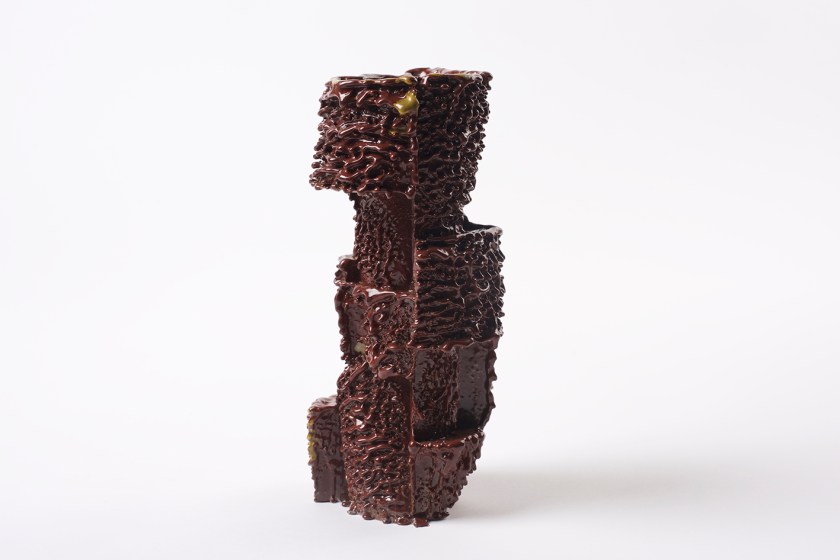

 BSAD Ceramics
You must be logged in to post a comment.