
Blog

Why Museums Matter

Holburne

Why Museums Matter for Mental Health

Friday 5 April 2019

Holburne Museum, Bath.

On-line booking is at:

www.holburne.org/events/symposium-why-museums-matter-for-mental-health/


Bringing together specialists from arts, heritage and health sectors, this cross sector learning event will talk about the benefits, challenges and outcomes of working together on Health and Heritage projects which use creativity to promote mental health and wellbeing.

As well as keynote speakers from the heritage and health fields, the Holburne and its Bath museum partners will be sharing learning from our 3 year Pathways to Wellbeing programme and will focus on how Museums can act as inclusive, therapeutic spaces, inspiring creativity to promote mental health and wellbeing.

This event is programmed to complement our new exhibition Why Museums Matter (7 Feb – 22 April, 2019) which celebrates the artwork of over 20 people with lived experience of mental health issues, social isolation or homelessness who have engaged with our Pathways to Wellbeing programme over the last 3 years. The programme offers free, supported, museum-based art groups for vulnerable adults who are referred through mental health and support organisations. This exhibition shows how objects from the Holburne’s collection have provided creative inspiration for a wide range of people, giving an insight into the connection between creativity and wellbeing.

For your information our ‘In conversation’ event on Thursday 11 April (7-8pm) may also be of interest as Tristram Hunt (Director, V&A), Maria Balshaw (Director of Tate) Sonia Boyce, (Artist and Professor of Black Art & Design at University of the Arts London) and Chris Stephens (Director, Holburne)  will be discussing the big question: Why do museums matter?
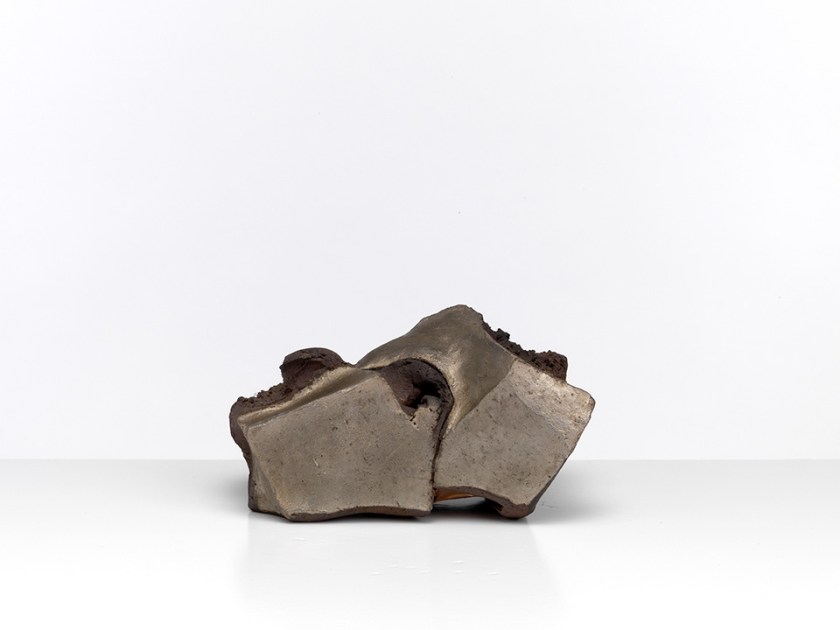
Contemporary

A reflection on the word ‘contemporary’, as it relates to ceramic practice, by Kate Lyons-Miller, for our intro to Analysis of Contemporary Context on Tuesday:

In line with current thinking and discourse

Not reproducing previous ideas, unless with new angles

But nevertheless working within certain, perhaps unwritten parameters, without which, in art, work could be classified as ‘outsider’

Cognisant of current interests regarding material, colour, purpose, message

As defined by popular cultural norms, (which shift), and is seen to do so by means of papers published, mainstream media comment, social media presence, ie new, but not too new…

The word can be contextualised to mean culturally valuable, as in Hauser and Wirth’s ‘Make’, or tired, as in ‘contemporary interior styling’, estate agent shorthand for neutral and appealing to largest population possible, inoffensive and bland

Contemporaneous with —  eg Cardew and Leach were working within the same European cultural context as Coper and Rie during the 1930s, but not necessarily producing similar work, indicates that the word does not mean ‘the same as’

For ceramics made now to be classed as ‘contemporary’ they would be selected for show by certain galleries, and into certain shows, these are in turn selected, by themselves and their peers

Is there a crossover between contemporary and studio?

BSAD Ceramics in Korea

Congratulations to two of our MA Ceramics Alumni – Jo Taylor and Alison Shanks – who have been selected for the Gyeongii International Ceramic Biennale in Korea. Jo is one of 302 artists selected from 1600 applicants and Ali one of only 42 exhibiting on site in Korea.

And to Dan Allen, Assistant Dean of the School, who is also one of the 302.

Full list of exhibitors and more info here.


Stefan Collini on metrics

b_AllSoulsquad

…the whole audit culture rests on a superstition about numbers. As soon as numbers come into play, we are all liable to fall into what Oscar Wilde called ‘careless habits of accuracy’. A number holds out the promise of definiteness, exactness and objectivity. But a number is a signifier like any other, a way of representing something. We appeal to numbers as a way of replacing imprecise, subjective human judgment with precise, objective measurement, but in fact we are just swapping one language system for another. (And in fact not a whole ‘language’, just a limited vocabulary: almost any use of numbers, outside certain areas of mathematics and science, will be embedded in words that specify what the numbers are supposed to stand for.) The existence of any statistic is the outcome of a process of human judgment. The digital revolution has brought with it a huge increase in quantifiable information, the very existence of which provides a constant temptation to metric misbehaviour. If there are numbers to be had, we come to feel that we must have them, even though they may mislead us into thinking we have solid information about something important when in reality all we have is the precise and selective misrepresentation of something insignificant. Muller again has some wise words: ‘Measurement is not an alternative to judgment; measurement demands judgment: judgment about whether to measure, what to measure, how to evaluate the significance of what’s been measured, whether rewards and penalties will be attached to the results, and to whom to make the measurements available.’ Some people speak numbers better than others and, as always, knowledge is power.

From: Stefan Collini, ‘Kept Alive for Thirty Days’, London Review of Books, Vol. 40 No. 21, 8 November, 2018, pp. 35-38


Design a site like this with WordPress.com
Get started