Blog

Krug | Cruche | Jarra | Jug (1 litre)

Meanwhile, back in the studio…

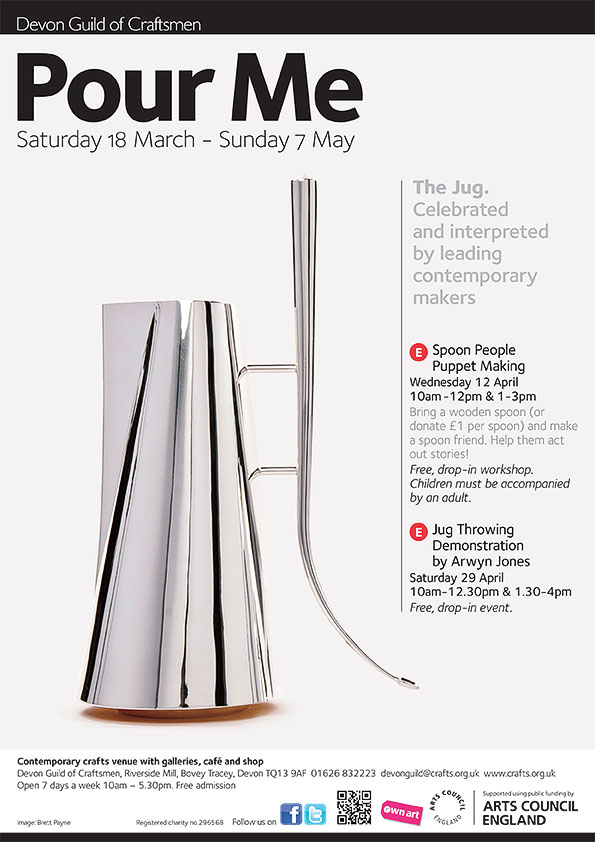
I will be delivering new work today, for this:
Layout 1

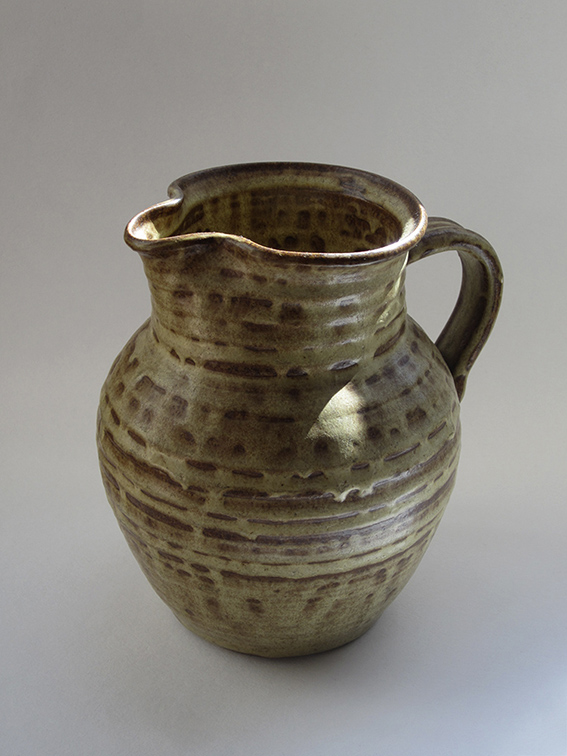
The work is a play on the volume of a jug, made at Prinknash Abbey, Gloucestershire. My friend, Kevin de Choisy, thinks it a very poor example of the form, but I quite like it. Anyway, it’s what’s inside that counts…
One Litre Jug_Prinknash Pottery_web


Krug | Cruche | Jarra | Jug (1 litre)

But if the holding is done by the jug’s void, then the potter who forms sides and bottom on his wheel does not, strictly speaking, make the jug. He only shapes the clay. No — he shapes the void… From start to finish the potter takes hold of the impalpable void and brings it forth as the container in the shape of a containing vessel. The jug’s void determines all the handling in the process of making the vessel. The vessel’s thingness does not lie at all in the material of which it consists, but in the void that holds.

And yet, is the jug really empty?

Martin Heidegger The Thing (1971)

When, in the appearance of the handle, one of its two functions is completely neglected in favour of the other, the impression made strikes a discordant note. This often occurs, for example, when the handles form merely a kind of relief ornament, being fully attached to the body of the vase, leaving no space between vase and handle. Here, the form rules out the purpose of the handle (that with it the vase may be grasped and handled), evoking a painful feeling of ineptness and confinement, similar to that produced by a man who has his arms bound to his body.

Georg Simmel The Handle (1911)

Wilson has developed a way of working that incorporates research, making, drawing, documenting, writing and existing objects – often included through ‘guided chance’. The exhibited works are selected by-products of an ongoing ‘game of Jug’, instigated by Heidegger’s essay and the subsequent ebay purchase of a jug made at Prinknash Abbey, the home of concrete poet, Dom Sylvester Houédard (‘nada nada’ from ceolfrith 15). Working out the limits of the game is a form of speculation on the reality of a jug.
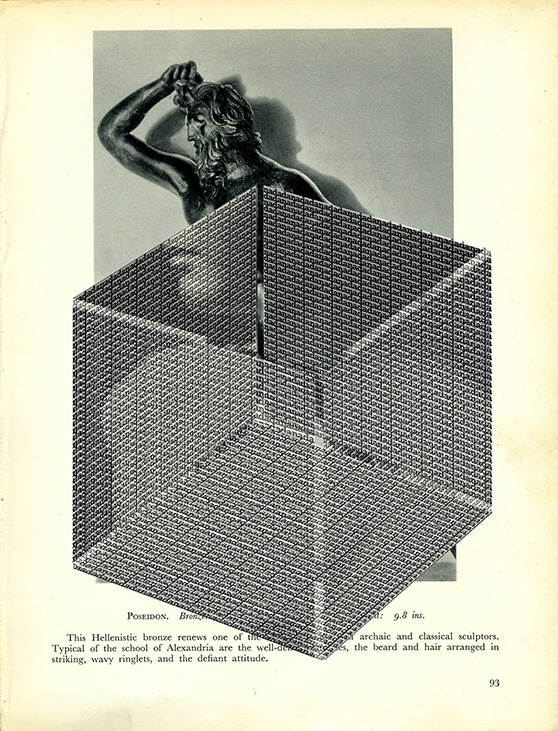
Poseidon_Full Void_Nada_webJug+Hand_Front_Tip [Converted]JUG_6


George Saunders on writing

We often discuss art this way: the artist had something he “wanted to express”, and then he just, you know … expressed it. We buy into some version of the intentional fallacy: the notion that art is about having a clear-cut intention and then confidently executing same.

The actual process, in my experience, is much more mysterious and more of a pain in the ass to discuss truthfully…

An artist works outside the realm of strict logic. Simply knowing one’s intention and then executing it does not make good art. Artists know this. According to Donald Barthelme: “The writer is that person who, embarking upon her task, does not know what to do.” Gerald Stern put it this way: “If you start out to write a poem about two dogs fucking, and you write a poem about two dogs fucking – then you wrote a poem about two dogs fucking.” Einstein, always the smarty-pants, outdid them both: “No worthy problem is ever solved in the plane of its original conception.”

Full article here.

AL Kennedy on Anthony Burgess

And part of his later use of essays, articles and appearances combined his writer’s vocation with that of a teacher. He’d met many types of people and was didactic in the widest possible sense – here is this joke, keep up before it’s gone; here is this word, you can learn it; here is my work, it exists and is part of culture, you can read it and also you might like to know that it is work, takes effort and that, for example: “When I hear a journalist like Malcolm Muggeridge praising God because he has mastered the craft of writing, I feel a powerful nausea. It is not a thing to be said. Mastery never comes and one serves a lifelong apprenticeship. The writer cannot retire from the battle, he dies fighting.” That’s art as a feet-on-the ground craft. And it’s writing as a way of being in the world – you get knowledge, you get skill, you get dignity, you get – if not righteousness, then some measure of contentment. Burgess saw the age of instantaneous fame coming, the toxic emptiness of much culture. It’s not at all an accident that another gentle ghost echoing through Earthly Powers is Tom, the music hall comic, the man who is praised towards the end of the book for practising a “comedy of kindness”. Burgess’s own humour could be less than kind – it was based on sharp observation, often of defects and stupidities, given that we’re only human – but he has Toomey describe Tom as a saint. In a book where there is a genuine miracle performed with terrible consequences, the spotlit clown is left the angel’s part. To see everything and still be kind – that is saintly. And educational. And entertaining. And a precious part of any healthy culture.

Full article here:

https://www.theguardian.com/books/2017/feb/25/anthony-burgess-100-birthday-high-art-low-entertainment


Design a site like this with WordPress.com
Get started