MediaWall: A Game of Jug

CW_MediaWall_NG

Photo by Neil Glen

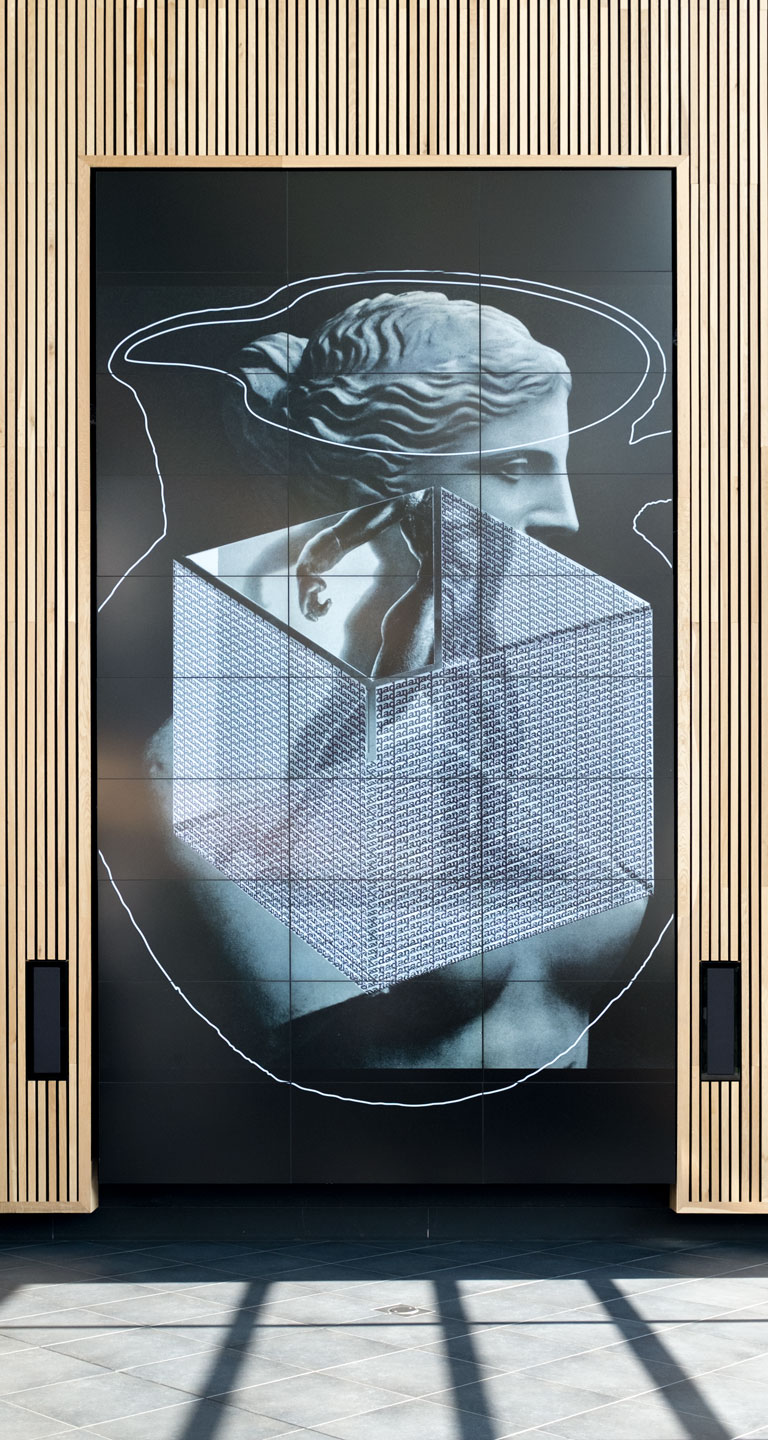
Dr Conor Wilson’s A Game of Jug is showing on the MediaWall, in the Commons building at Newton Park, Bath Spa University (until 29 June).

A loop of thirty images show for a minute each on the thirty-screen wall, which is over seven metres in height. This gives a unique opportunity to see these layered, high-resolution images in all-at-once detail.

Wilson has developed a practice-research process that incorporates making, drawing, documenting, writing and existing objects – the latter often included through ‘guided chance’. The exhibited images are by-products of an ongoing ‘game of Jug’, instigated by Martin Heidegger’s essay, ‘The Thing’, and the subsequent purchase of a jug made at Prinknash Abbey, home and workplace of concrete poet, Dom Sylvester Houédard. Two further texts [‘The Handle’ by Georg Simmel and ‘me as poet rather than critic’ by Dom Sylvester Houédard] and two books of images were added to the game, setting up a play between analogue and digital, image and text, two and three dimensional making.


collection

I am starting an occasional series of ceramics in the domestic environment. Send me an image or two of something you own and love and I will post…

First up, one from my own collection:

Josh Redman, Aboriginal [a cup with a name!] (c 2009)

art | craft | design

We juggle all three. We are none and all. We develop our understanding of the world around us through material (and social) investigation. The multifarious materials and processes of ceramics are our starting point, our structuring device.

We develop as autonomous learners – independent, resourceful and resilient.

We look inwards and we look outwards – we create value through our labour and the depth of our engagement. We share, we give and we learn to trade in the attention economy.

Assessment + Lygia Clark

The assessment process throws up some interesting questions / problems for both tutors and students. Hearing a reading from Joanna Moorhead’s biography of Leonora Carrington on the radio this morning and rereading the Lygia Clark text, that I had saved for Emily, prompted me to think, ‘don’t limit your (our) selves’. Whether it’s in response to the market, marks, or expectations. Reflect on the assessment and absorb, accept, challenge. A course is only an environment and a set of individuals – both students and staff – working it out as they go along.

Well done to everyone for progressing to the next stage – I look forward to exciting masters projects…
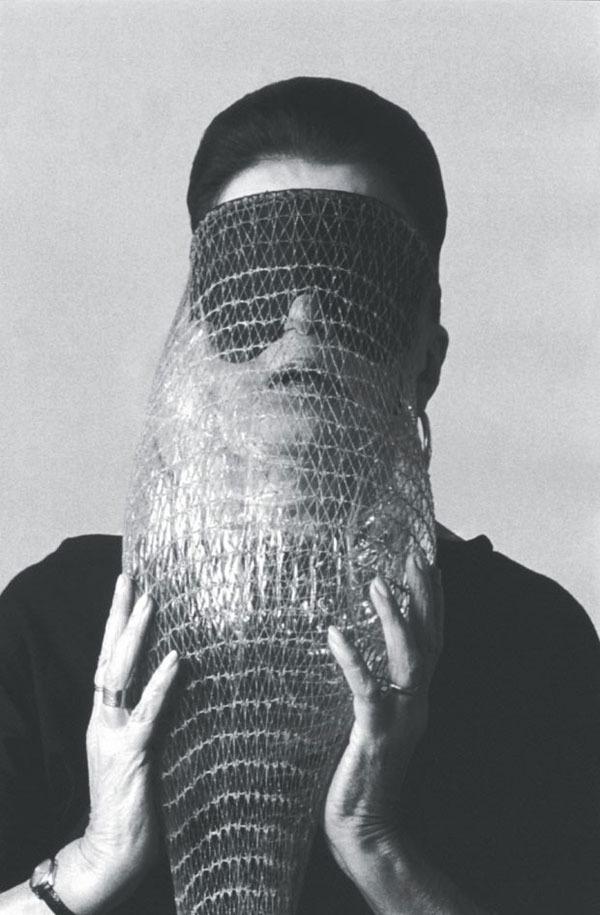
Lygia-Clark-com-a-m_scara-Abismo_-para-exposi_o-no-Pa_o-Imperial_-em-1986-_detail_em

Between 1966 and 1988, a period that coincided with a personal crisis and subsequent long sojourn of exile in Europe, Clark achieved a radical conclusion to the concepts and practices that she had confronted during the 1960s. During this time, she made very simple objects out of ordinary things such as gloves, plastic bags, stones, seashells, water, elastics, and fabric. These “sensorial objects” were designed to make possible a different awareness of our bodies, our perceptual capabilities, and our mental and physical constraints. Clark’s repertoire of sensorial objects, all based on ready-made and transformed everyday tools, was meant to be activated in both contact and coordination with our body and organic functions. By matching our gestures with these simple objects, Clark intended to project an organic dimension over inert and industrial materials.

 Ultimately, Clark’s research drove her to profoundly question the status and utility of conventional works of art as means of expression. Claiming to abandon art making, she created a practice using materials applied directly to the body, engaging with her subjects in a very direct way. Among the propositions (as she called them) featured in this last section of the exhibition are works generally considered “biological architectures” and other experiential or “relational objects” from the early 1970s, which are shown here alongside original and replica devices that Clark conceived in order to allow the audience to approach relational experiences. It is only now, after her death, that this last chapter may be read in terms of the histories of happenings, performance, and public engagement as a radical form of art making.

 From MOMA press release, published here.
Maiolino (+ Chillida)

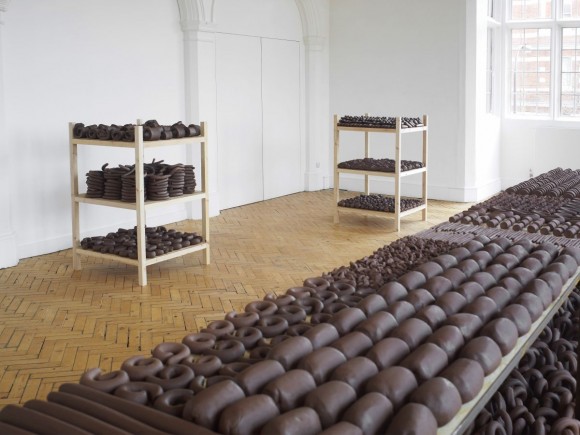
anna-maria-maiolino

My first encounter with clay in 1989 provoked a storm inside me. Putting my hand in that wet mass of earth – dirt, matter – immediately a whole cosmos, a vision, presented itself. As material, clay is the perfect prototype. It carries within itself multi-form possibilities. Thus in the realm of creation, we are placed before a paradox: form limits the life force, imprisons it, but nonetheless permits it to organise itself. As the embodiment of discipline, form is at the same time the beginning of death. I was seduced by these reveries and ended up literally planting my feet on the ground and my head in matter, giving rise to a new series of works that considered these vital questions while putting process first.

Anna Maria Maiolino (1999) in Griselda Pollock, ‘Being, Making, Thinking: Encounters in Art as Life’ in Anna Maria Maiolino, ed. by Helena Tatay (Barcelona: Fundació Antoni Tàpies), p.203 [Pollock’s emphasis]

It reminds me of something I wrote for my PhD:

Mute, dumb, passive. Sticky formlessness. I know what Chillida meant, when he said,

‘This material, so bland, so… awww…’

No purchase, until he had a block to interrogate.


Eduardo Chillida in Chillida [on VHS], dir. by Lawrence Boulting (Phaidon Video, London: Phaidon), 1996.

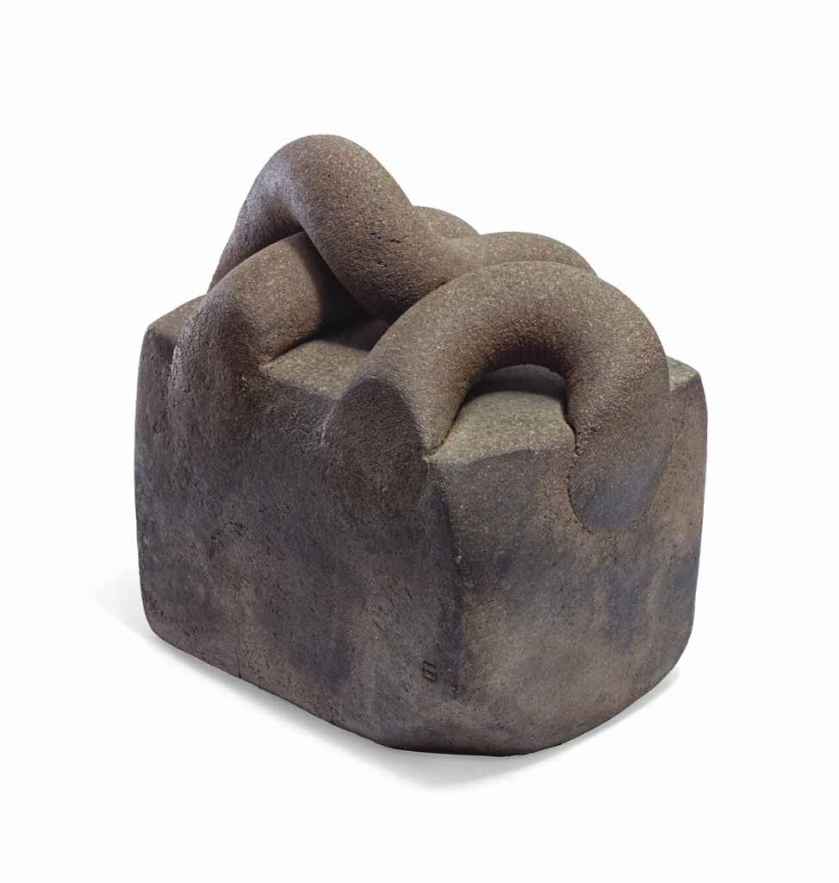
eduardo_chillida_lurra_g25_d5652194g

Chillida / Lurra

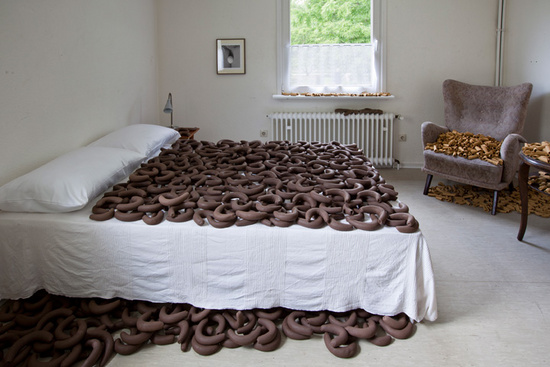
amm_2012_documenta3-qi7Vyy

Maiolino 2012

Design a site like this with WordPress.com
Get started